
 Image 1 of 1
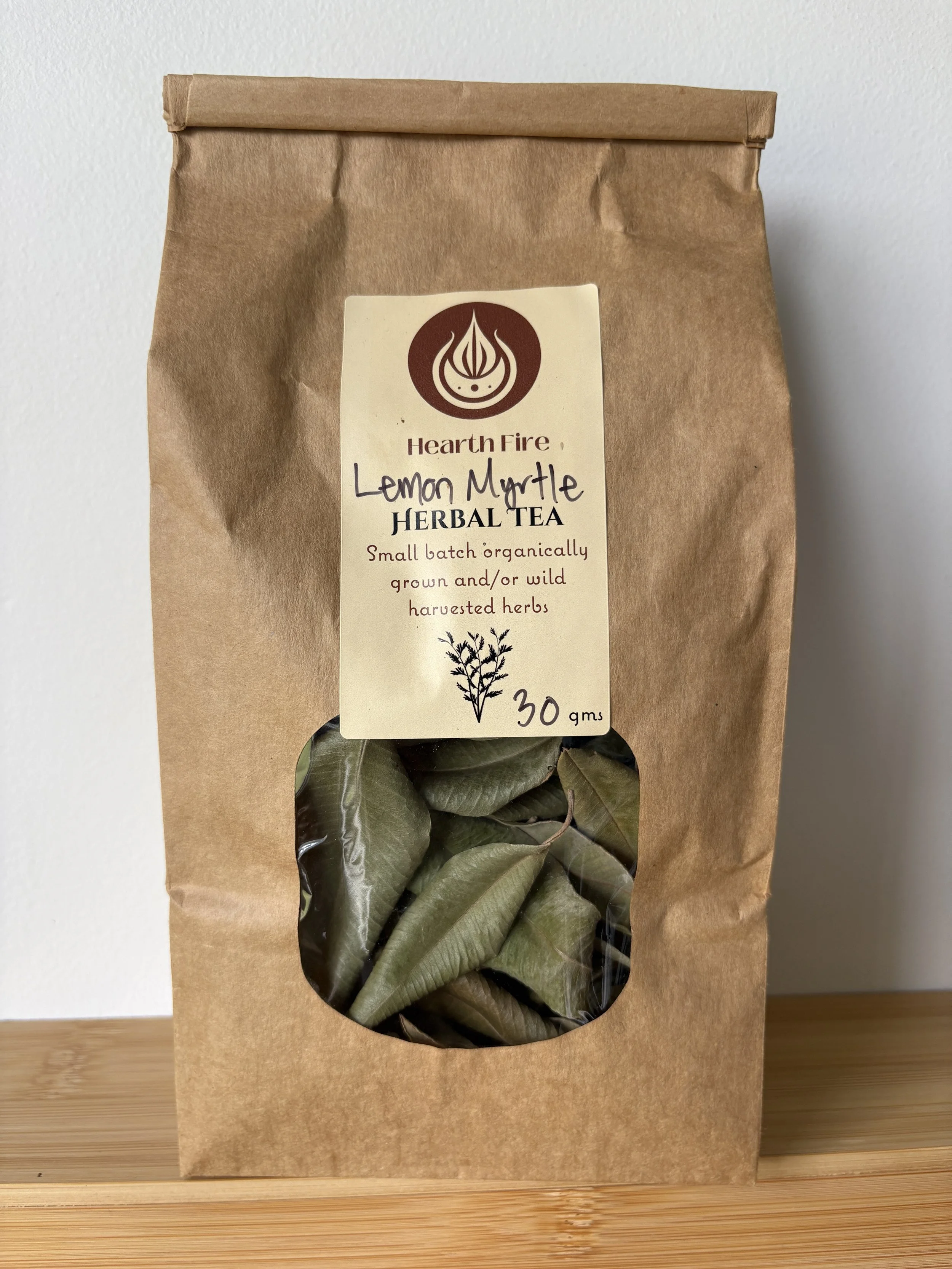
Lemon Myrtle Tea (Backhousia citriodora) - my personal favourite tea for flavour and everyday use!
An Australian native tree, the leaves are high in medicinal essential oils and antioxidants. The tea makes a delicious infusion with a range of medicinal properties supported by traditional use and growing scientific evidence. I grow and use it in small batches.
Potential benefits of lemon myrtle tea
Antimicrobial and antiviral support: Laboratory studies show lemon myrtle extracts can inhibit bacteria and some fungi. As a tea, it may help support mucosal defenses (throat and upper respiratory tract) and be a gentle adjunct when you have a mild sore throat or respiratory irritation.
Anti-inflammatory relief: The citral and other constituents can reduce inflammatory signaling, which may ease sore throats, mild respiratory inflammation, and general discomfort.
Antioxidant support: Flavonoids and other compounds scavenge free radicals, helping reduce oxidative stress when consumed as part of a balanced diet.
Digestive soothing: Traditionally used to ease mild digestive upset, wind, and cramping; a warm cup after a meal can be calming for the gut.
Aromatic calming effect: may reduce stress and mental fatigue; inhaling the steam while sipping the tea adds a gentle mood-lifting quality.
Mild analgesic properties: Some people report modest relief from headaches and tension when drinking the tea, likely due to a combination of anti-inflammatory and calming effects.
How to prepare and dose
Standard infusion: Use 1–2 teaspoons of dried lemon myrtle leaves per cup (250 ml) of hot water. Steep 5–10 minutes, covered, to retain volatile oils. Taste and adjust. Strain and drink warm.
Stronger infusion: For a more concentrated cup, use up to 1 tablespoon per cup and steep 10–15 minutes; this increases both flavor and bioactive compounds but remains much milder than essential oil.
Frequency: 1–3 cups daily is common and gentle for most adults. Use as needed for symptom support.
Safety and cautions
Pregnancy and breastfeeding: Avoid high doses and concentrated extracts. Moderate amounts as a tea are often considered safe, but check with a healthcare provider if pregnant, breastfeeding, or planning pregnancy.
Essential oil caution: Do not ingest lemon myrtle essential oil directly. Oils are highly concentrated and can cause irritation, toxicity, or allergic reactions.
Allergies and sensitivities: Stop use if you develop skin rash, throat irritation, nausea, or other adverse reactions. People sensitive to citral or other citrus-like compounds should use with caution.
Other simple herbal uses at home
Sore throat rinse: Make a strong infusion, let it cool until warm, and use as a gargle to soothe throat discomfort.
Steam inhalation: Add a strong infusion to a bowl and inhale steam (covering head with a towel) to ease nasal congestion.
Lemon Myrtle Tea (Backhousia citriodora) - my personal favourite tea for flavour and everyday use!
An Australian native tree, the leaves are high in medicinal essential oils and antioxidants. The tea makes a delicious infusion with a range of medicinal properties supported by traditional use and growing scientific evidence. I grow and use it in small batches.
Potential benefits of lemon myrtle tea
Antimicrobial and antiviral support: Laboratory studies show lemon myrtle extracts can inhibit bacteria and some fungi. As a tea, it may help support mucosal defenses (throat and upper respiratory tract) and be a gentle adjunct when you have a mild sore throat or respiratory irritation.
Anti-inflammatory relief: The citral and other constituents can reduce inflammatory signaling, which may ease sore throats, mild respiratory inflammation, and general discomfort.
Antioxidant support: Flavonoids and other compounds scavenge free radicals, helping reduce oxidative stress when consumed as part of a balanced diet.
Digestive soothing: Traditionally used to ease mild digestive upset, wind, and cramping; a warm cup after a meal can be calming for the gut.
Aromatic calming effect: may reduce stress and mental fatigue; inhaling the steam while sipping the tea adds a gentle mood-lifting quality.
Mild analgesic properties: Some people report modest relief from headaches and tension when drinking the tea, likely due to a combination of anti-inflammatory and calming effects.
How to prepare and dose
Standard infusion: Use 1–2 teaspoons of dried lemon myrtle leaves per cup (250 ml) of hot water. Steep 5–10 minutes, covered, to retain volatile oils. Taste and adjust. Strain and drink warm.
Stronger infusion: For a more concentrated cup, use up to 1 tablespoon per cup and steep 10–15 minutes; this increases both flavor and bioactive compounds but remains much milder than essential oil.
Frequency: 1–3 cups daily is common and gentle for most adults. Use as needed for symptom support.
Safety and cautions
Pregnancy and breastfeeding: Avoid high doses and concentrated extracts. Moderate amounts as a tea are often considered safe, but check with a healthcare provider if pregnant, breastfeeding, or planning pregnancy.
Essential oil caution: Do not ingest lemon myrtle essential oil directly. Oils are highly concentrated and can cause irritation, toxicity, or allergic reactions.
Allergies and sensitivities: Stop use if you develop skin rash, throat irritation, nausea, or other adverse reactions. People sensitive to citral or other citrus-like compounds should use with caution.
Other simple herbal uses at home
Sore throat rinse: Make a strong infusion, let it cool until warm, and use as a gargle to soothe throat discomfort.
Steam inhalation: Add a strong infusion to a bowl and inhale steam (covering head with a towel) to ease nasal congestion.