
 Image 1 of 1
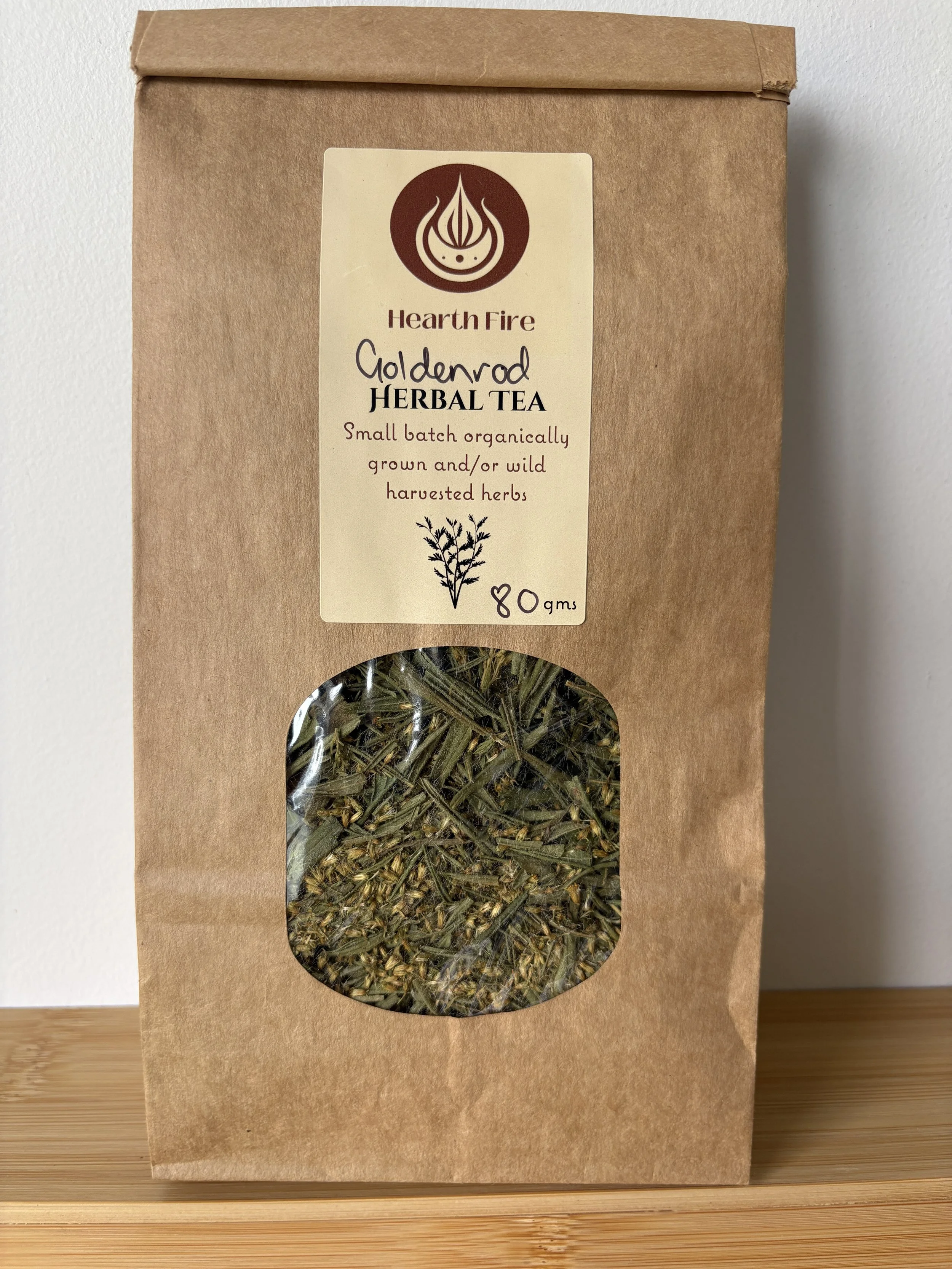
Goldenrod (Solidago canadensis) Tea. The tea with many benefits!
It’s not an understatement to call this tea a multi-purpose all-rounder! There's so many reasons to have this tea on hand for everyday health support or to specifically target an ailment. An anti-inflammatory, anti-oxidants, tannins, astringent, high in quercetin.
A gentle, warming herbal infusion made from the flowering tops and leaves. I harvest during the flower budding stage for optimal potency. With a long history of use for several medicinal purposes. Below is a summary of its traditional and supported uses, preparation, dosage for home use.
Medicinal uses
Urinary tract support: Goldenrod is commonly used as a mild diuretic and to support overall urinary tract health. It can help increase urine flow and reduce water retention, making it useful for early stage uti, mild bladder irritation and periodic cystitis.
Anti-inflammatory and soothing: Constituents like saponins and flavonoids give goldenrod anti-inflammatory properties. Tea can be soothing for inflammatory conditions like long term chronic infections, joint and muscular pain.
Respiratory support: A drying herb traditionally used for colds, bronchitis, and hay fever, goldenrod tea is considered to help ease mucus congestion and soothe irritated airways. It’s often combined with other expectorant herbs.
Wound care and topical uses: Te can be cooled and used as a compress or wash for minor skin irritation and mild wounds due to its astringent and anti-inflammatory qualities.
Antioxidant activity and allergy support: Goldenrod contains flavonoids and phenolic compounds like quercetin and rutin, that act as antioxidants, supporting general cellular health.
I believe the tannins may also help with digestive health by tightening the junctions of the gut lining
Preparing goldenrod tea
Fresh plant: Use flowering tops and upper leaves.
Dried plant: Use flowering tops, stems and leaves dried in a cool, dark place.
Typical infusion: 1 tablespoon fresh) per cup of just-boiled water. Steep covered for 10–15 minutes, strain, and drink warm.
Decoction (for stronger extract, topical use, or when using tougher stalks): Simmer 1–2 tablespoons dried herb in 2 cups water for 10–15 minutes, cool, strain.
Dosage and frequency
Adult dosage: 1 cup (250 ml) up to 3 times daily as a supportive tonic or diuretic. Water down for children and add honey if needed
Precautions and interactions
Kidney conditions: Because goldenrod has diuretic properties, people with severe kidney disease or those taking strong diuretics should consult a health professional before use.
Pregnancy and breastfeeding: Limited safety data — avoid or consult a qualified practitioner before using during pregnancy or breastfeeding.
Blood-thinning medications: Goldenrod contains vitamin K and other compounds; if you take anticoagulants (like warfarin), check with your prescriber before regular strong brew or extract use.
Goldenrod (Solidago canadensis) Tea. The tea with many benefits!
It’s not an understatement to call this tea a multi-purpose all-rounder! There's so many reasons to have this tea on hand for everyday health support or to specifically target an ailment. An anti-inflammatory, anti-oxidants, tannins, astringent, high in quercetin.
A gentle, warming herbal infusion made from the flowering tops and leaves. I harvest during the flower budding stage for optimal potency. With a long history of use for several medicinal purposes. Below is a summary of its traditional and supported uses, preparation, dosage for home use.
Medicinal uses
Urinary tract support: Goldenrod is commonly used as a mild diuretic and to support overall urinary tract health. It can help increase urine flow and reduce water retention, making it useful for early stage uti, mild bladder irritation and periodic cystitis.
Anti-inflammatory and soothing: Constituents like saponins and flavonoids give goldenrod anti-inflammatory properties. Tea can be soothing for inflammatory conditions like long term chronic infections, joint and muscular pain.
Respiratory support: A drying herb traditionally used for colds, bronchitis, and hay fever, goldenrod tea is considered to help ease mucus congestion and soothe irritated airways. It’s often combined with other expectorant herbs.
Wound care and topical uses: Te can be cooled and used as a compress or wash for minor skin irritation and mild wounds due to its astringent and anti-inflammatory qualities.
Antioxidant activity and allergy support: Goldenrod contains flavonoids and phenolic compounds like quercetin and rutin, that act as antioxidants, supporting general cellular health.
I believe the tannins may also help with digestive health by tightening the junctions of the gut lining
Preparing goldenrod tea
Fresh plant: Use flowering tops and upper leaves.
Dried plant: Use flowering tops, stems and leaves dried in a cool, dark place.
Typical infusion: 1 tablespoon fresh) per cup of just-boiled water. Steep covered for 10–15 minutes, strain, and drink warm.
Decoction (for stronger extract, topical use, or when using tougher stalks): Simmer 1–2 tablespoons dried herb in 2 cups water for 10–15 minutes, cool, strain.
Dosage and frequency
Adult dosage: 1 cup (250 ml) up to 3 times daily as a supportive tonic or diuretic. Water down for children and add honey if needed
Precautions and interactions
Kidney conditions: Because goldenrod has diuretic properties, people with severe kidney disease or those taking strong diuretics should consult a health professional before use.
Pregnancy and breastfeeding: Limited safety data — avoid or consult a qualified practitioner before using during pregnancy or breastfeeding.
Blood-thinning medications: Goldenrod contains vitamin K and other compounds; if you take anticoagulants (like warfarin), check with your prescriber before regular strong brew or extract use.