Galinsoga parviflora - foraging and cooking with
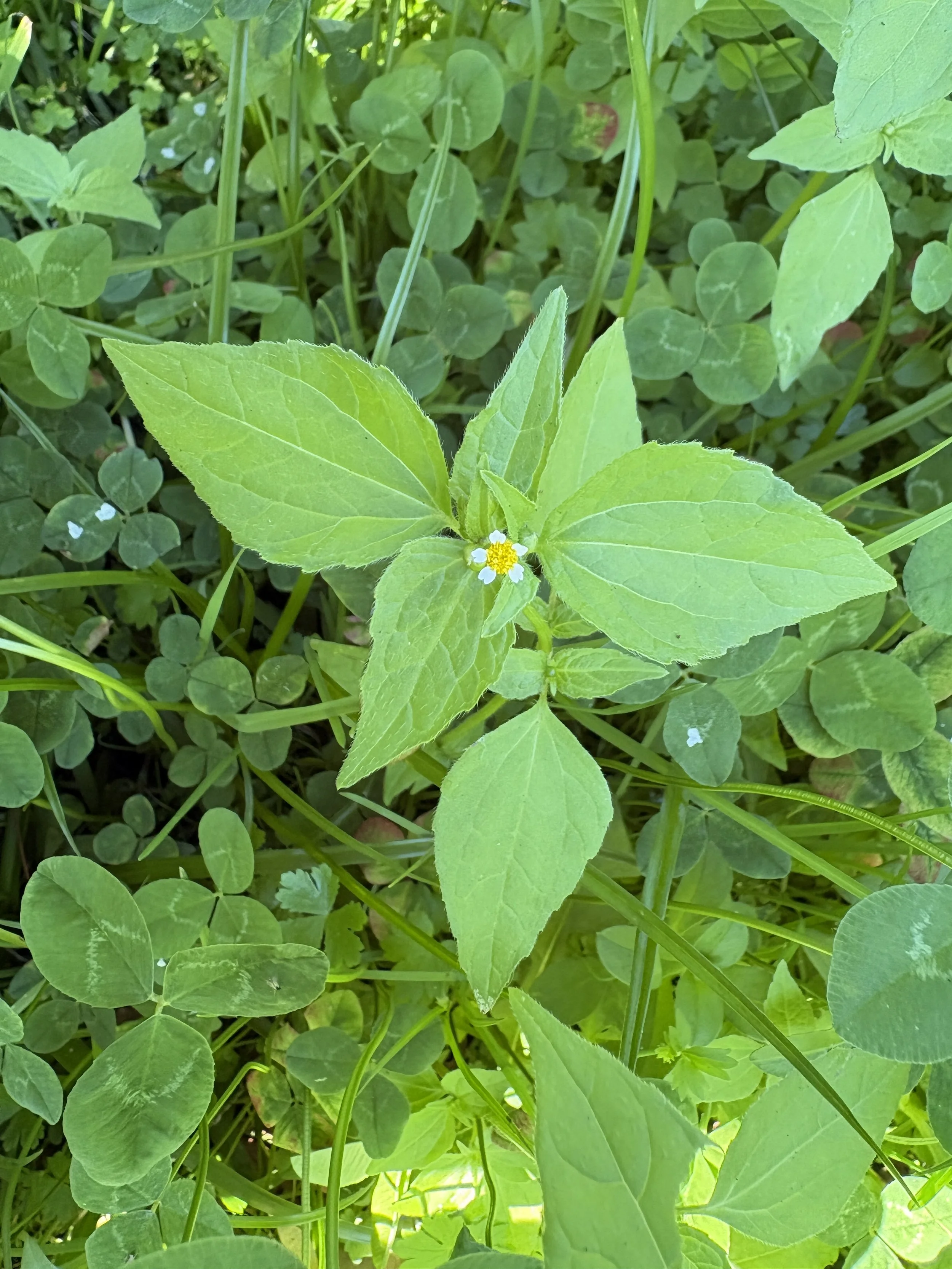
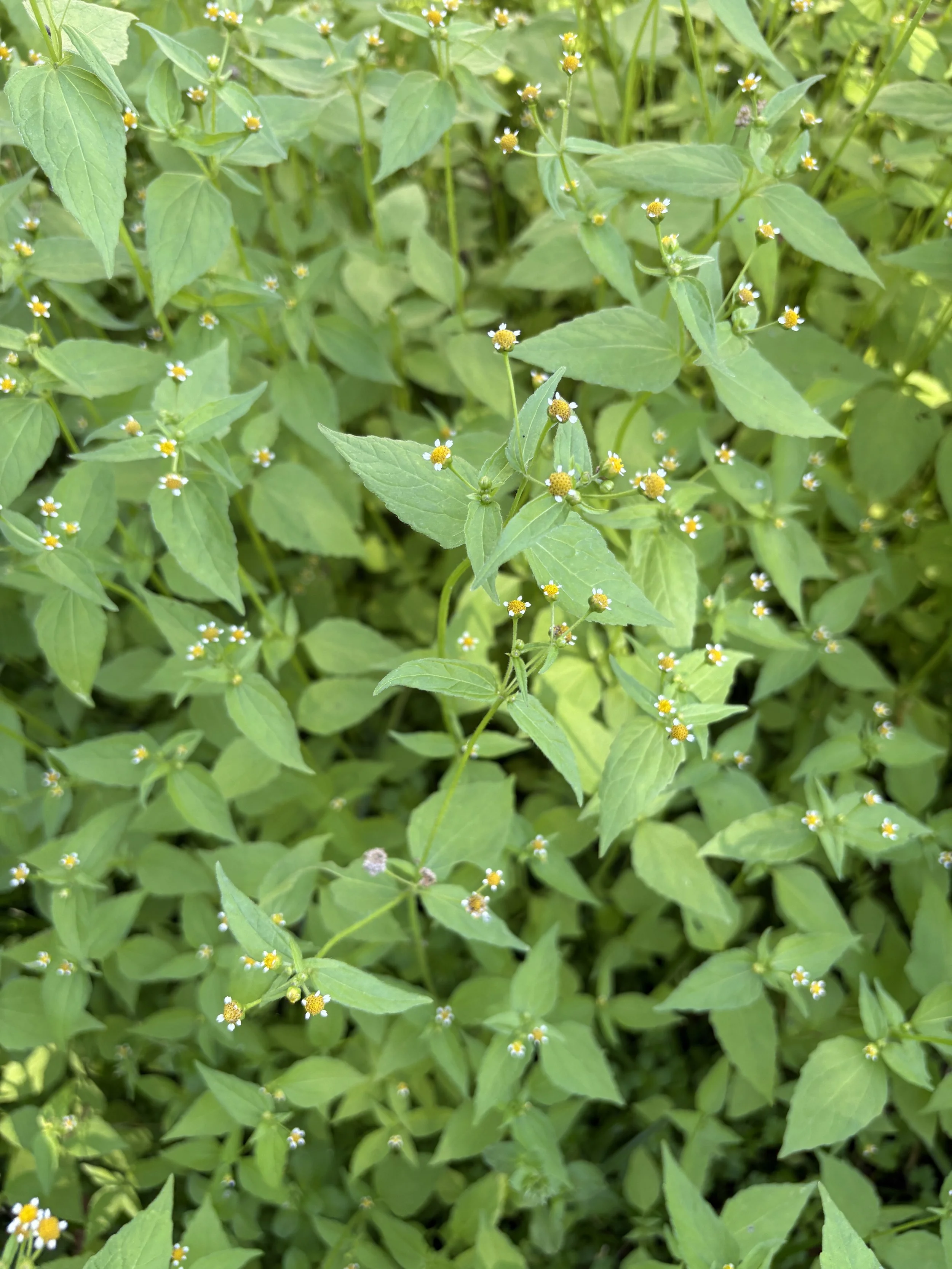
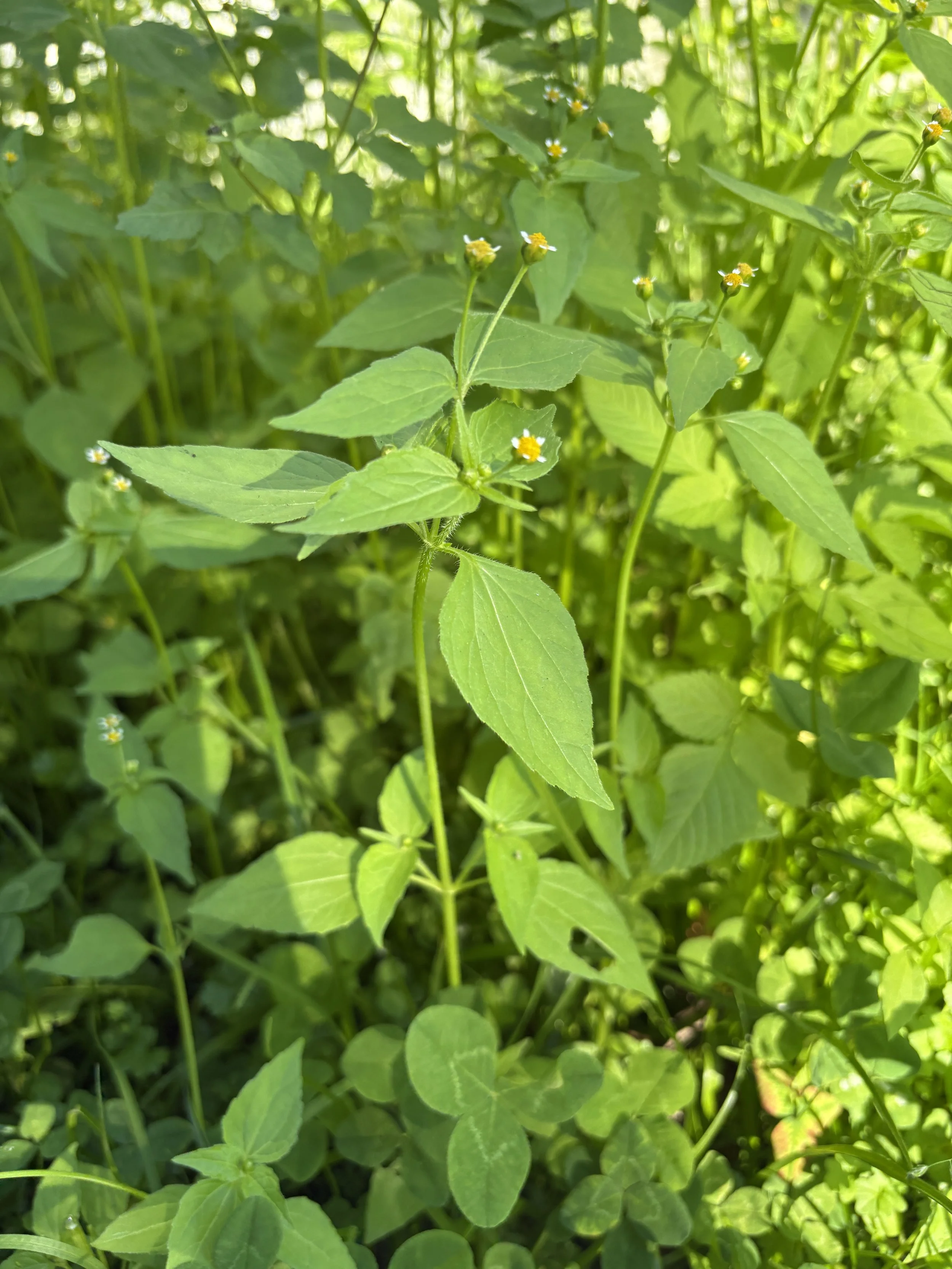
Galinsoga parviflora (commonly called gallant soldier or quickweed) is a small, fast‑growing annual in the Asteraceae family. Native to Central and South America, it’s now widespread as an opportunistic plant in gardens and disturbed soils worldwide, including the Mid North Coast of NSW. It’s a fantastic example of wild plant - herbal medicine - home herbalism and food. See recipe for Ajiaco con Guascas (Colombian Potato and Chicken Stew with Guascas) below.
Description
Habit: low, spreading annual, often forming mats or loose clumps.
Stems and leaves: hollow, branching stems with opposite, toothed, ovate leaves covered in fine hairs.
Flowers: tiny daisy‑like heads (5–10 mm across) with a central cluster of yellow disc florets surrounded by a few small white ray florets; flowers open quickly and are produced in abundance.
Seeds: small achenes that are easily dispersed, allowing rapid colonisation.
Ecology and uses
Habitat: thrives in disturbed ground, garden beds, pathways and agricultural areas; prefers moist, nutrient‑rich soils but tolerates a range of conditions.
Role: provides quick nectar and pollen for small insects; often one of the first plants to appear in cleared or cultivated soil.
Edibility and herbal uses: young leaves and shoots are edible—mild, slightly grassy—used as a cooked leaf vegetable or added to soups and stews in some traditions. It has been used in folk medicine for mild anti‑inflammatory and wound‑healing purposes, but historical uses vary and scientific evidence is limited. As with foraged greens, identify plants carefully and introduce them cautiously into the diet.
Note on identification
Often confused with similar small Asteraceae species; consult multiple features (leaf shape, hairiness, flower size and arrangement) when identifying.
Season
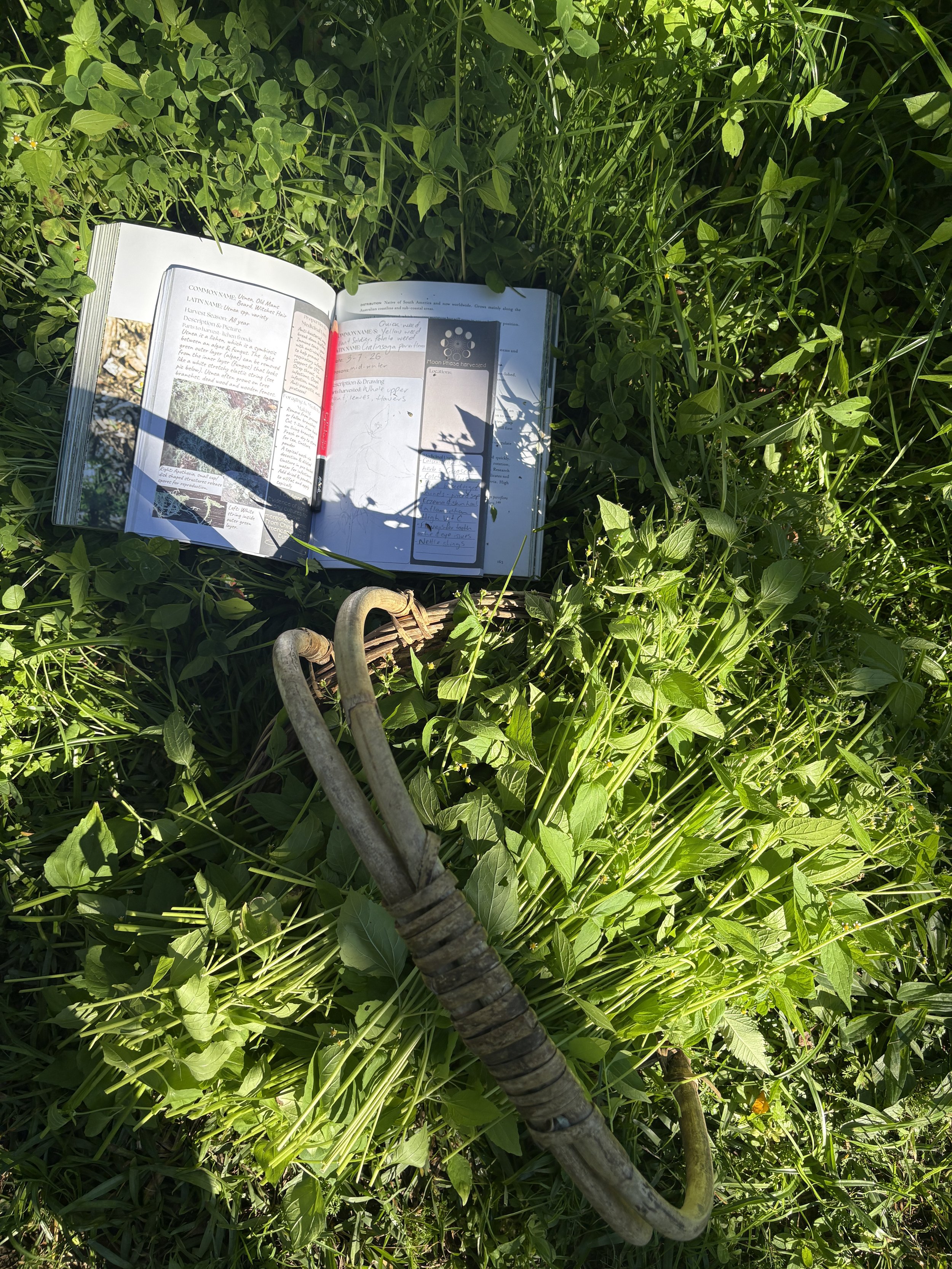
I harvested this lot in early July, mid Winter here on the Mid Coast of NSW, while it was very lush. Although I have seen it growing at various times of the year.
Ajiaco con Guascas (Colombian Potato and Chicken Stew with Guascas)
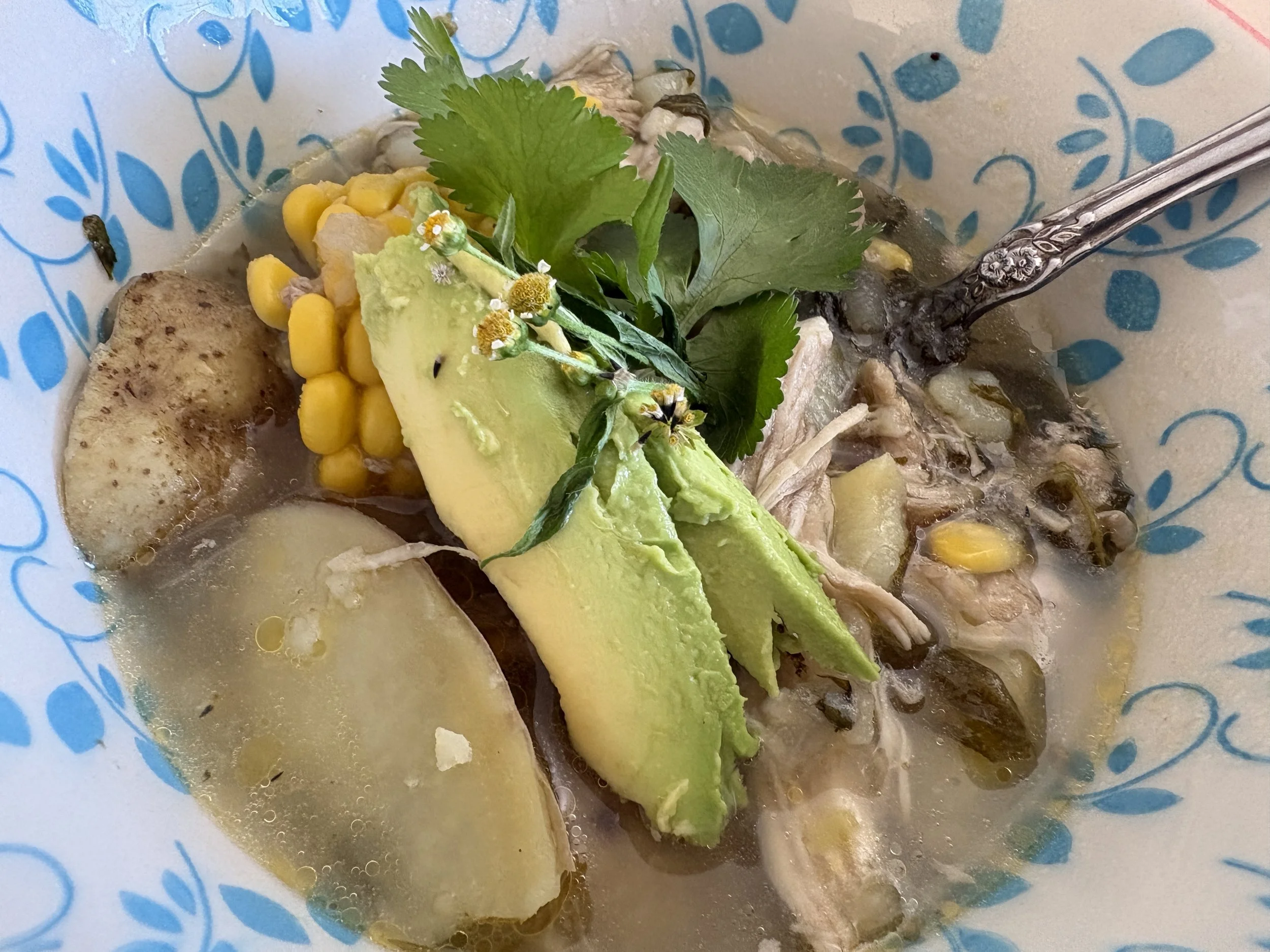
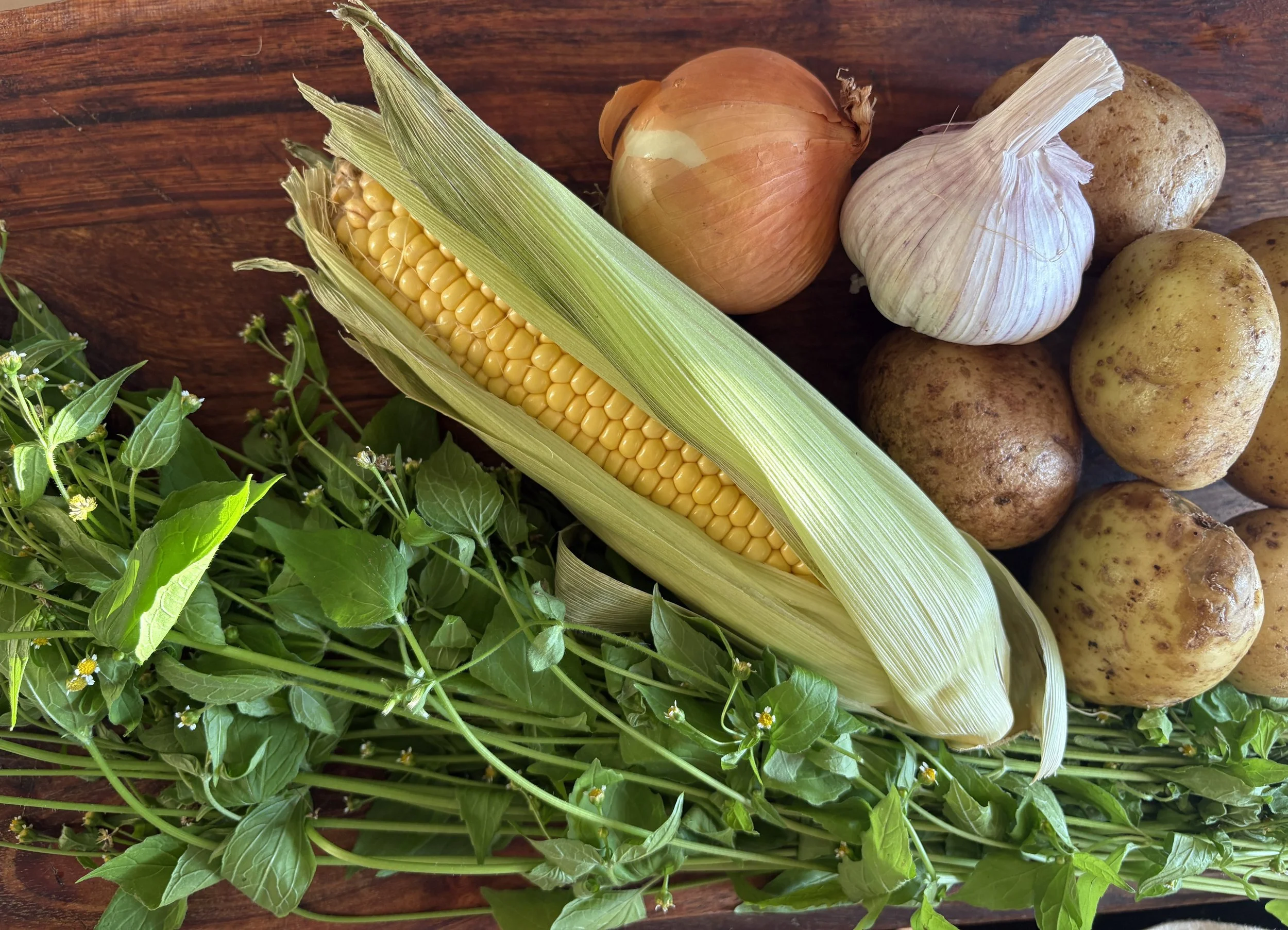
I made a version of this Columbian soup with the ingredients I had on hand and lots of fresh Galinsoga parviflora, called Guascas in this recipe. Fresh Galinsoga parviflora is slightly mucilaginous and thickened the soup a little too. I didn’t have any capers but I really enjoyed this soup and am keen to make it again, possibly with pickled nasturtium seeds as a foraged caper substitute. I only had one type of potato and it still turned out thick and delicious.
Ingredients
1 whole free-range chicken (about 1.5–2 kg), cut into pieces, or 1 kg bone-in chicken pieces
3 litres water (or enough to cover chicken)
2 teaspoons salt, plus extra to taste
2 garlic cloves, crushed
1 onion, finely chopped
3 ears of corn, each cut into 2–3 rounds (or 3–4 corn cobs)
800 g mixed potatoes, peeled and cut into large chunks: 400 g yellow/white waxy potatoes, 400 g criolla or fingerling (or use small waxy potatoes and one variety that breaks down a little)
1 cup fresh guascas (Galinsoga parviflora) or 2–3 tablespoons dried guascas— essential flavour
2 tablespoons chopped fresh coriander
1 tablespoon chopped fresh spring onion or more to taste
Freshly ground black pepper to taste
Slices of avocado and capers to serve (optional but traditional)
Lime or lemon wedges to serve
Method
Prepare the stock: In a large heavy-based pot, add the chicken pieces, water and 1 teaspoon of salt. Bring to a gentle boil over medium heat, skimming any foam that rises. Reduce heat to low and simmer for 25–35 minutes until chicken is cooked through and tender.
Remove the chicken: Lift the chicken out of the pot and set aside to cool slightly. Reserve the broth in the pot.
Sauté aromatics: In a small pan, gently sauté the crushed garlic and chopped onion in a little butter or oil until translucent and fragrant (2–3 minutes). Add to the broth.
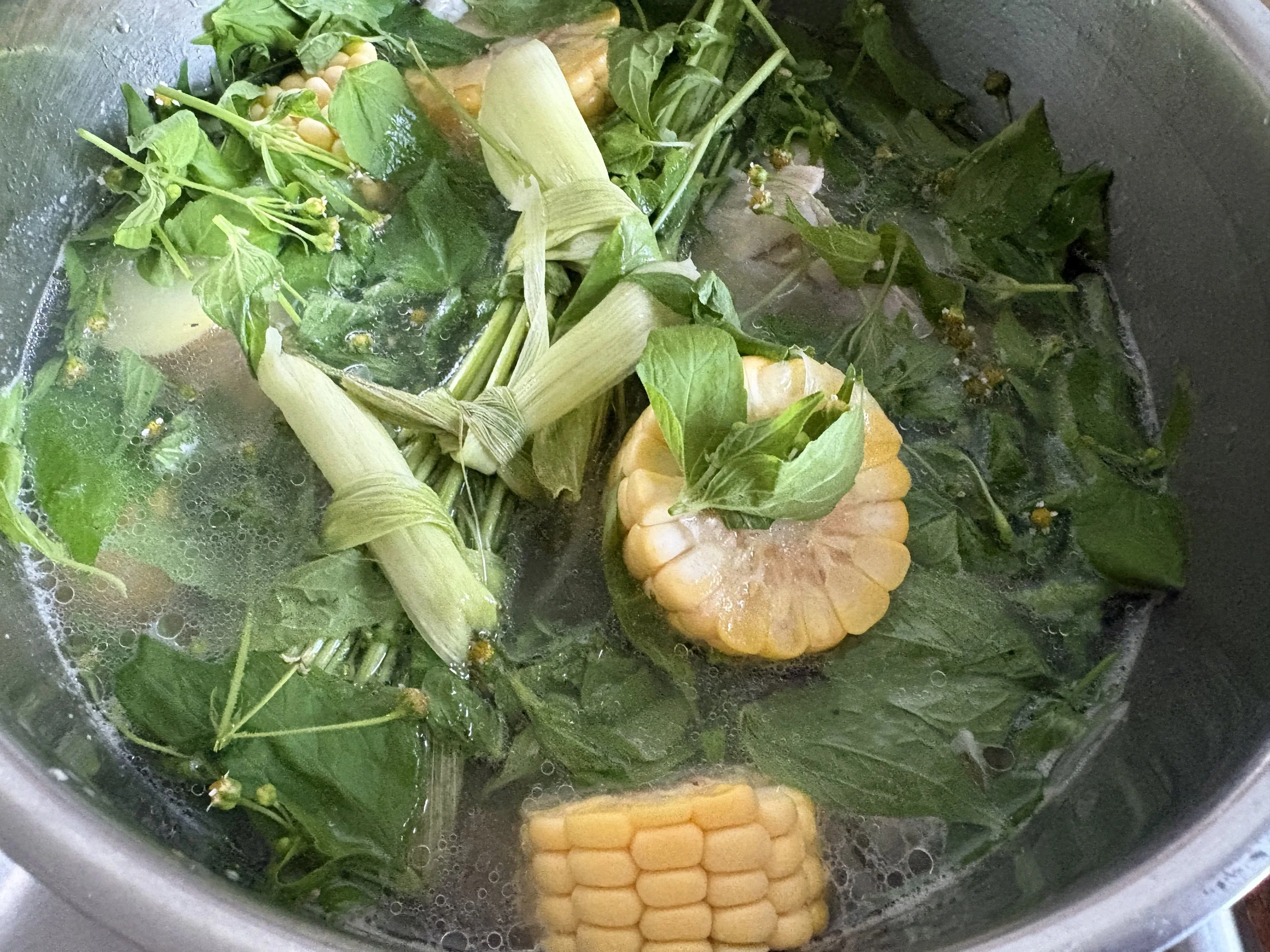
Add corn and potatoes: Add the corn rounds and the larger, firmer potatoes to the broth. Simmer for about 15 minutes, then add the softer potatoes (the ones that break down more easily). Continue simmering until the potatoes are tender and some have begun to partly disintegrate, creating a slightly thickened broth — about 10–15 more minutes.
Shred the chicken: While the potatoes cook, remove the skin and bones from the chicken and shred the meat into bite-sized pieces. Return the shredded chicken to the pot.
Add guascas and herbs: Stir in the fresh guascas (or dried guascas) and chopped cilantro and scallion. Cook gently for another 5–10 minutes so the guascas release their distinctive flavour. Taste and adjust salt and pepper.
Serve: with slices of avocado and a few capers on the side, with lime or lemon wedges to squeeze over. Garnish with extra chopped coriander and scallion.
Notes and tips
Guascas is the quintessential herb for ajiaco; fresh is best but dried works well if rehydrated briefly in warm water before use. If you can’t source guascas, use a blend of dried oregano and a pinch of dried coriander leaves, though the flavour won’t be quite the same.
Use a mix of potato textures: one variety that holds its shape and another that breaks down to thicken the soup naturally.
Ajiaco is a rustic, comforting stew; adjust thickness by mashing a few potatoes in the pot for a creamier texture.
Keen to get foraging and record your finds…
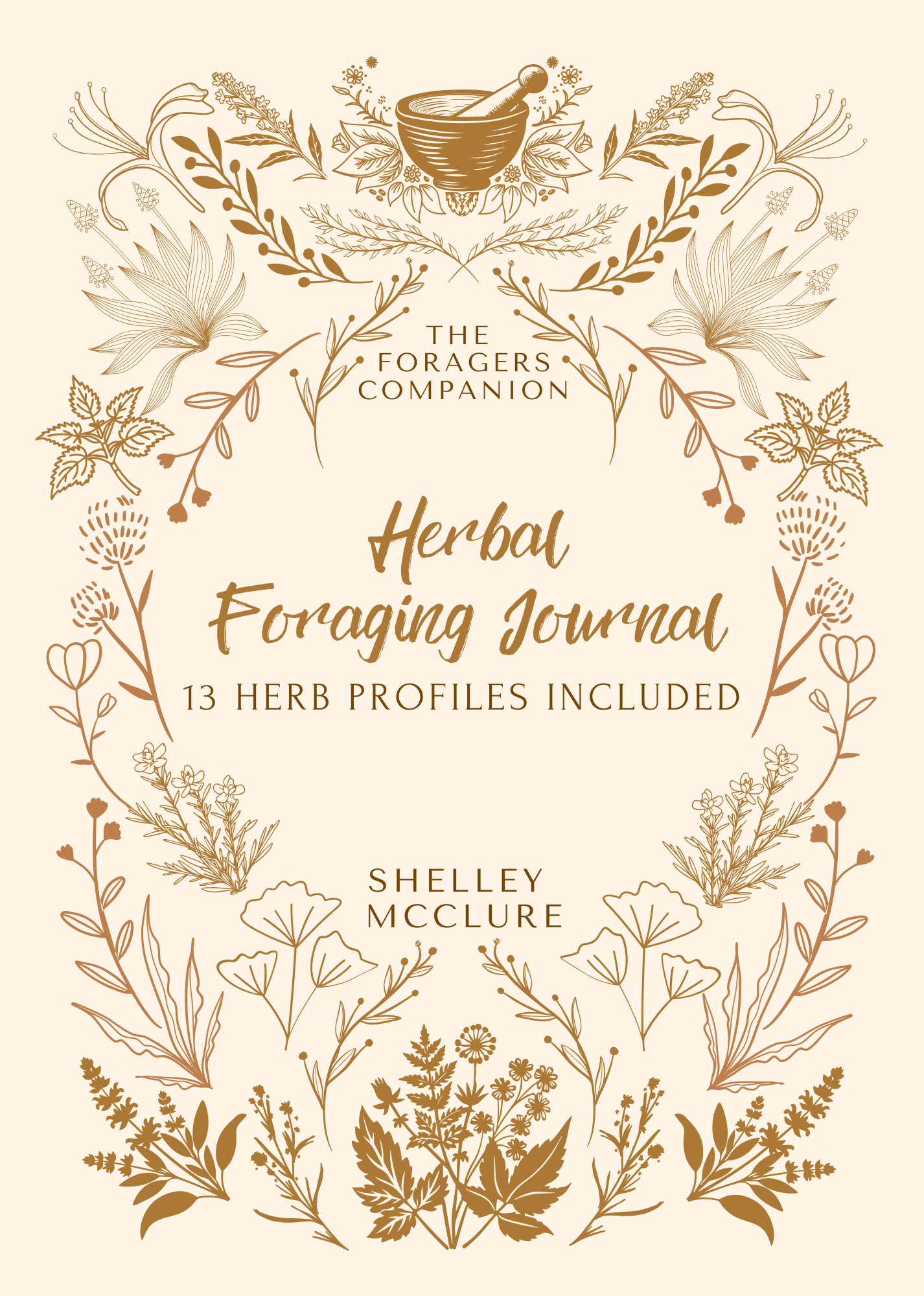
A companion for both budding and seasoned foragers. Keep track of foraged plants, jot down helpful details, and build your own collection of simple herbal knowledge.
Complete with 13 common medicinal plant profiles that can be found in Australia and around the world. 36 pages for recording your own foraging finds, a useful equipment list, foraging tips & guidance. Plus photos to assist with identification, traditional uses, and unique properties. Record where you found each plant, seasonal observations & preparation methods. Over time, this becomes your own living record that you can pass on to future generations. Perfect for herbal enthusiasts, wild crafters and anyone curious about plant medicine, this journal invites you to slow down, observe closely, and cultivate your own relationship with the healing power of plants in your local area.
Plant profiles included: - Chickweed - Cleavers - Dandelion - Goldenrod - Gotu Cola - Japanese Honeysuckle - Kelp - Motherwort - Mullein - Nettle - Plantain - St John's Wort - Usnea
See sample pages pictured.
Purchasing Options: If you’re in Australia and wanting a foraging journal and/or herbal products - purchasing here in the store is the way to go. If you’re not in Australia and just want a foraging journal you can buy direct from the Lulu Publishing Bookstore HERE. The price is the same.